August Wilson sets the tone with the title: Fences. The fence in the play is one of the biggest symbols of all. It serves both a physical and figurative purpose in the play. The fence is a barrier that separates Troy Maxson, the main character, and the world around him. He does not want to accept the changes surrounding him and secludes himself behind the fence. The unfinished fence stands as a reminder that Troy is at a standstill, unwilling to move forward with his life.
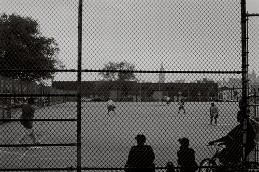
Learn more about symbolism in the play by clicking on the image
Fences
By: Rev. Rebecca Guile Hudson
He's aware
of the yard he lives in --
aware of the fences
that define
his constant existence
He feels his life
is missing
from the world
outside those fences --
He's very afraid
of what lies beyond them, feels
very safe,
having such a perimeter
contain his life --
and yet,
just
yet,
when roaring lightning
cracks storms into his skies,
all he can think of, all
he's impelled towards,
from the very deep in-side-
out of his soul
is to panic & bolt,
cause himself even bodily harm
just to
find a way
out, find a way
to dig free, to
leave those fences behind --
to run amuck, un-
entrapped, seeking
freedom from fear
in the very places
that he sees as offering
no safety, no
familiarity
Then, when he calms
down,
when he's done
with his run,
the sole object burning
in his primitive mind
is to seek again
the warmth and comfort
of familiarity and safety,
and he
returns to his yard,
settles back down within his fences,
and pretends to himself
that he'll never --
No, he'll never
do that scary thing
ever again and then,
as if to prove it to himself,
to convince himself he
really means it this time
he enters into the house
yarded by those fences
and goes to sleep, goes
unconscious,
and dreams of freedom
inside the walls
of the house
inside the yard,
in the center
of the fences
that circumscribe his world
